How to Run a Family Trivia Night

Build a custom game around birthdays, holidays, family history, inside jokes, and favorite memories.

Make it personal

The best family game boards include stories people recognize: funny quotes, old vacations, favorite foods, holiday traditions, and shared milestones.

Keep the rules simple

Pick a tile, answer the question, reveal the result, and move on. Simple structure keeps the focus on the people in the room.

Invite all ages in

Mix easy memory questions with a few tougher throwbacks so younger players and longtime family members both have moments to shine.

Build around shared memories

The best family trivia boards are specific: vacations, holiday foods, funny quotes, pets, childhood stories, favorite songs, and old photos. Personal categories make the game feel like it could only happen with your family.

Make it fair for mixed ages

Put kids and adults on mixed teams. Use easy family facts at low values, broader pop culture at medium values, and family-history clues at high values.

Sample family board

Categories: Memories, Favorites, Holidays, Who Said It, Throwbacks. Add one final challenge where teams wager on a family history question or a funny prediction.

Keep the game from getting awkward

Avoid clues about embarrassing topics, old conflicts, money, or anything that could put one person on the spot. Funny is good; uncomfortable is not.

Quick takeaway

The fastest way to use this guide is to choose one real event, write the game around that event, and keep the board small enough to finish. A custom Jeopardy-style game works best when the categories match the people in the room: a class needs review categories, a work team needs useful shared knowledge, and a party needs prompts that create stories.

How to turn this into a board

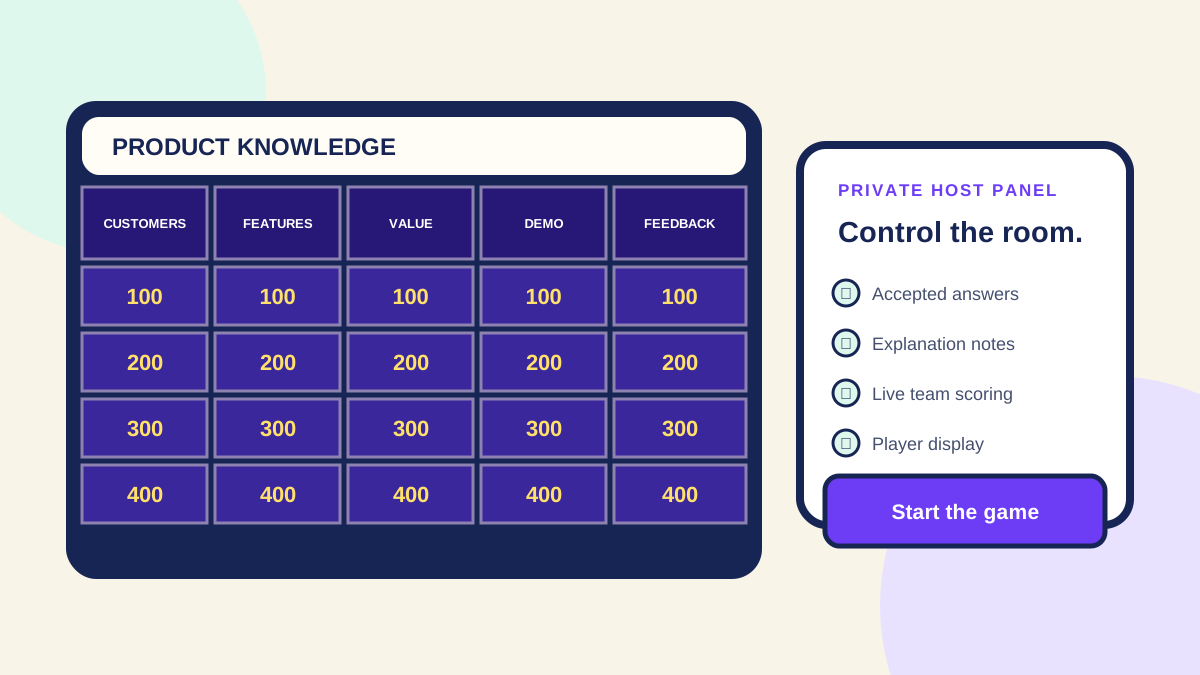
Start with five categories and five clues per category. Put direct recall or easy group knowledge in the low-value rows, then use higher values for examples, scenarios, tricky details, or final-review questions. Before hosting, add accepted answers and short explanations so the reveal teaches, clarifies, or gives the group a reason to react.

Best next action

If you already know your topic, open the game maker and create the first category now. If you are still deciding what to ask, use the templates and examples pages first, then return to the builder with a tighter plan. The goal is not to make a giant trivia database; it is to build one board that helps this specific group have a better live activity.

How this connects to the rest of Quiz Champ

Use the maker page when you are ready to build, the templates page when you need a starting structure, the examples page when you need category ideas, and the how-to-play page when you want rules for hosting. Teachers should connect this guide to classroom review. Work hosts should connect it to team-building and training. Party, family, and church hosts should choose prompts that feel personal, easy to explain, and comfortable for the whole group.

Frequently asked questions

Can I turn this idea into a playable Quiz Champ board?

Yes. Use the guide to choose categories, write clues, add accepted answers, and then build the board in Quiz Champ so you can host it live.

Should I use a template or start from scratch?

Use a template when you want a faster setup or a familiar structure. Start from scratch when the game needs to match a specific lesson, training, person, party, or event.

How long should a live quiz game last?

Most groups do best with 20 to 30 minutes of play. For longer events, use more categories, add a final challenge, and plan a short recap after the winner is announced.

Start building

Create a custom Jeopardy-style board in Quiz Champ, then host it live for your classroom, team, party, church group, family night, or online event.

Trying to improve your own skills? Try Jeopardy practice, a Jeopardy practice test, or Jeopardy practice questions before hosting.

Quiz Champ is an independent Jeopardy-style game maker and is not affiliated with, endorsed by, or sponsored by the owners of the original game show brand.