Ways to Use Quiz Champ at Work

Make onboarding, product knowledge, policies, retreats, and meeting warm-ups more interactive with a live quiz game.

Replace passive review with participation

When a team picks a tile and buzzes in, training becomes active. People recall facts, compare answers, and learn from the reveal.

Use private host controls

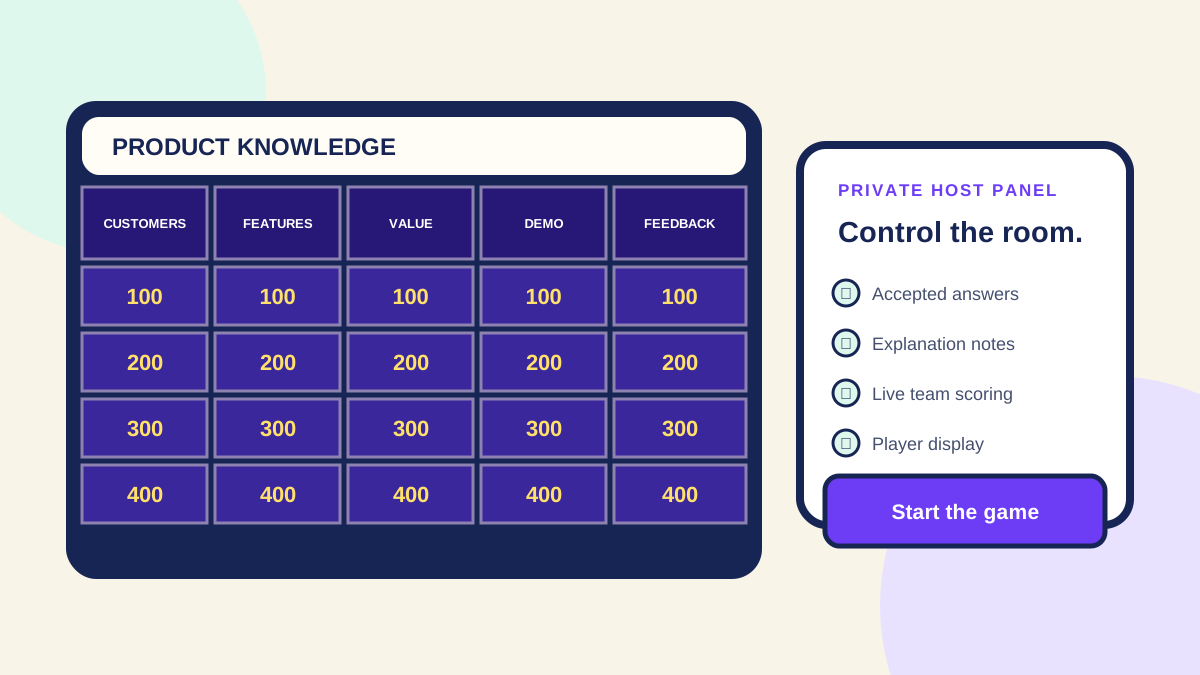
The host can keep notes, correct answers, and scoring controls private while the group sees a clean game screen.

Choose practical categories

Try Company Facts, Product Knowledge, Customer Scenarios, Tools, and Wild Card for a balanced workplace board.

When to use a work quiz game

Use Quiz Champ when a meeting needs participation, a training session needs recall, or an onboarding topic needs reinforcement. It works especially well after people have already seen the material once.

Workplace-safe categories

Use Product, Customers, Company History, Tools, Scenarios, Team Wins, Process, and Wild Card. Avoid personal questions, performance comparisons, and anything that makes an employee the joke.

Remote team setup

Share the player display, assign teams, and choose one spokesperson per team. Use chat for final answers if the call is large, and keep explanations short so the meeting stays on schedule.

A sample onboarding board

Categories: People, Product, Tools, Customers, First Week. Good clues include where to find support docs, what a product feature does, and which team owns a process.

Quick takeaway

The fastest way to use this guide is to choose one real event, write the game around that event, and keep the board small enough to finish. A custom Jeopardy-style game works best when the categories match the people in the room: a class needs review categories, a work team needs useful shared knowledge, and a party needs prompts that create stories.

How to turn this into a board

Start with five categories and five clues per category. Put direct recall or easy group knowledge in the low-value rows, then use higher values for examples, scenarios, tricky details, or final-review questions. Before hosting, add accepted answers and short explanations so the reveal teaches, clarifies, or gives the group a reason to react.

Best next action

If you already know your topic, open the game maker and create the first category now. If you are still deciding what to ask, use the templates and examples pages first, then return to the builder with a tighter plan. The goal is not to make a giant trivia database; it is to build one board that helps this specific group have a better live activity.

How this connects to the rest of Quiz Champ

Use the maker page when you are ready to build, the templates page when you need a starting structure, the examples page when you need category ideas, and the how-to-play page when you want rules for hosting. Teachers should connect this guide to classroom review. Work hosts should connect it to team-building and training. Party, family, and church hosts should choose prompts that feel personal, easy to explain, and comfortable for the whole group.

Frequently asked questions

Can I turn this idea into a playable Quiz Champ board?

Yes. Use the guide to choose categories, write clues, add accepted answers, and then build the board in Quiz Champ so you can host it live.

Should I use a template or start from scratch?

Use a template when you want a faster setup or a familiar structure. Start from scratch when the game needs to match a specific lesson, training, person, party, or event.

How long should a live quiz game last?

Most groups do best with 20 to 30 minutes of play. For longer events, use more categories, add a final challenge, and plan a short recap after the winner is announced.

Start building

Create a custom Jeopardy-style board in Quiz Champ, then host it live for your classroom, team, party, church group, family night, or online event.

Trying to improve your own skills? Try Jeopardy practice, a Jeopardy practice test, or Jeopardy practice questions before hosting.

Quiz Champ is an independent Jeopardy-style game maker and is not affiliated with, endorsed by, or sponsored by the owners of the original game show brand.